August 14, 2026 | 8 minute read
When you choose rhinoplasty, you expect the procedure to improve your appearance, your breathing, or both. When the result does not match your expectations, you may feel disappointed, frustrated, or worried that you have run out of options.
Fortunately, revision rhinoplasty may address concerns from a previous nose surgery and allow for the natural-looking results you were seeking. Also called secondary or corrective rhinoplasty, this procedure can address certain cosmetic problems, functional issues, and structural weaknesses after an initial rhinoplasty. The right approach depends on what changed during your first surgery, how your nose healed, and what can safely be improved.
Table of Contents
- What Is Rhinoplasty Revision Surgery?
- Can Revision Rhinoplasty Fix a Botched Nose Job?
- How Is Revision Rhinoplasty Performed?
- How Long Should You Wait Before Correcting a Rhinoplasty?
- What Is Recovery Like After Revision Rhinoplasty?
- Why Choosing the Right Revision Rhinoplasty Surgeon Matters
- Frequently Asked Questions About Fixing a Bad Rhinoplasty
What Is Rhinoplasty Revision Surgery?
Revision rhinoplasty is a secondary nose surgery that aims to improve the results of a previous cosmetic or functional nasal procedure. Patients may consider revision surgery when they remain unhappy with the appearance of their nose, develop a new concern during healing, or experience functional problems such as difficulty breathing.
Revision rhinoplasty is not simply a repeat of your original procedure. Previous surgery may have changed the cartilage, bone, soft tissue, and internal support of your nose. Scar tissue can also make the anatomy more difficult to evaluate and reshape.
For these reasons, each revision requires a customized surgical plan. The right surgeon will evaluate your current nasal structure, your previous surgical experience, your concerns, and your goals before deciding whether another procedure can offer meaningful improvement.
Can Revision Rhinoplasty Fix a Botched Nose Job?
Revision rhinoplasty can improve many unwanted results after a previous rhinoplasty, whether your nasal concerns are cosmetic or functional. The amount of improvement possible depends on your nasal anatomy, scar tissue, remaining cartilage, skin quality, previous surgical changes, and healing response.
Some goals of corrective surgery may include:
- Improving asymmetry or an unnatural appearance (asymmetrical nostrils, crooked nose, etc.)
- Addressing undercorrection or overcorrection
- Addressing certain breathing or functional problems from a deviated septum, nasal valve collapse, or other nasal obstruction caused by poor surgical technique
- Restoring weakened nasal structure
- Improving poor healing
- Improving facial harmony
- Helping patients feel more confident about their appearance
However, “botched procedure” can describe very different problems. One patient may have a small contour concern, while another may have significant structural damage or breathing difficulty.
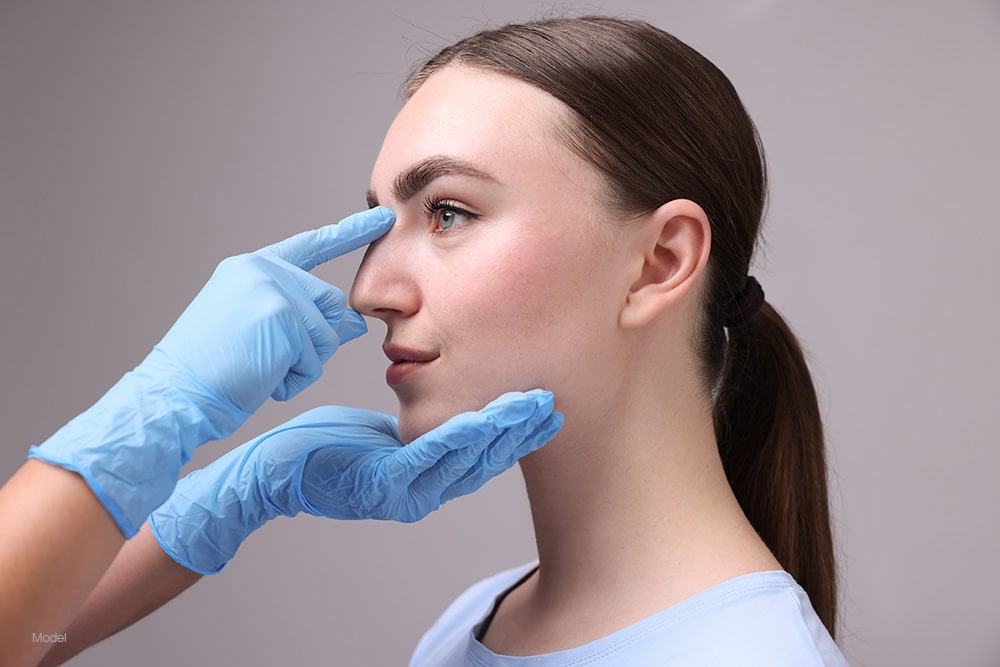
A consultation provides the clearest answer about what can realistically change. During your visit, Dr. Gonzalez examines your nose, listens to your concerns, reviews relevant information about your initial surgery and recovery process, and discusses realistic expectations, risks, and the surgical process.
How Is Revision Rhinoplasty Performed?
Your revision surgery should match the specific changes your nose needs. Dr. Gonzalez may use an open or closed approach.
During closed revision rhinoplasty, Dr. Gonzalez places incisions inside the nostrils. This approach avoids an external incision but limits access to the internal structures, making it less suitable for many complex revisions.
With open revision rhinoplasty, Dr. Gonzalez uses an incision across the columella, the strip of tissue between the nostrils. This approach provides greater visibility and access to the internal nasal structures, so open revision is often necessary for cases requiring more extensive correction. Even so, incisions are carefully placed to keep scarring small and discreet.
Some revision procedures also require grafting to add support or rebuild areas affected by the first surgery. Depending on the individual case, Dr. Gonzalez may use cartilage from the ear, rib, nasal septum, or other graft material when additional structural support is necessary.
How Long Should You Wait Before Correcting a Rhinoplasty?
Most patients are recommended to wait at least one year after their first rhinoplasty before undergoing surgical revision. This gives the nose time to heal before Dr. Gonzalez evaluates the final result and plans another procedure.
This can feel difficult when you already know that you dislike your result. However, swelling and healing continue for months after rhinoplasty, and the appearance of the nose can change during that time. Unless you have an urgent medical concern that requires earlier evaluation, patience gives Dr. Gonzalez a clearer picture of the final problem and the changes another surgery may reasonably achieve.
What Is Recovery Like After Revision Rhinoplasty?
Recovery varies based on the extent of your correction and your natural healing response. Many patients are instructed to wear a protective splint or nasal packing to avoid healing complications. Swelling, bruising, tenderness, discomfort, and other side effects should be expected in the days following surgery.
Many patients feel comfortable returning to normal daily activities after about one week, although you will still need to protect your healing nose and follow your post-operative instructions closely. Follow-up appointments may include removing splints or adjusting nasal packing when necessary.
Visible improvement develops gradually. Some patients may notice early improvements around 10 days after revision rhinoplasty, with further improvement continuing in the following weeks and months. Final results may take up to one year as the remaining swelling resolves.
Why Choosing the Right Revision Rhinoplasty Surgeon Matters
Revision rhinoplasty requires careful planning to correctly address each patient’s concerns. A skilled surgeon must evaluate the existing structure, prior changes, scar tissue, cosmetic and breathing concerns, and the realistic limits of another operation. For patients seeking to correct a botched rhinoplasty in El Paso, TX, board-certified plastic surgeon Dr. Gonzalez is a top rhinoplasty surgeon.
Dr. Marco A. Gonzalez, also known as “Dr. G” to his patients, is a board-certified plastic and reconstructive surgeon who serves patients in El Paso, TX. Having over 20 years of education, training, and surgical experience, Dr. G strives to create a safe, comfortable, and compassionate environment for patients who want to feel heard. He combines his advanced body and facial contouring precision with individualized treatment planning tailored to your needs and goals.
When you already feel disappointed or uncomfortable from a previous nasal surgery, a surgeon who understands what went wrong, what another procedure may improve, and what limitations may exist can make the difference. Dr. Gonzalez will thoughtfully guide you from consultation through recovery.
Frequently Asked Questions About Fixing a Bad Rhinoplasty
Can a second rhinoplasty completely fix a bad nose job?
The answer depends on your anatomy and the effects of your first surgery. Revision rhinoplasty can address many cosmetic, functional, and structural concerns, but Dr. Gonzalez must examine your nose before determining the extent of correction that is safely possible.
Can revision rhinoplasty improve breathing difficulties?
It may. Revision rhinoplasty can address certain functional problems when they result from correctable structural issues. Difficulty breathing is also a recognized potential complication of rhinoplasty, so Dr. Gonzalez will evaluate both the appearance and function of your nose.
Is revision rhinoplasty more difficult than the first surgery?
Revision surgery can be more complex because prior surgery may have altered nasal anatomy and led to scar tissue. The available cartilage and remaining structural support also affect surgical planning. However, Dr. Gonzalez will analyze and plan for every aspect of your surgery.
Will I need cartilage grafting?
Not every patient needs grafting. In some cases, grafts can provide additional support or help rebuild weakened nasal structures. Dr. Gonzalez may use ear cartilage, rib cartilage, or other graft material depending on the needs of the individual case.
How much does revision rhinoplasty cost in El Paso?
The cost varies based on the complexity of your revision, your surgical plan, anesthesia, and facility fees. During your consultation, Dr. Gonzalez will create a personalized surgical plan and provide you with a more accurate cost estimate.
How do I know whether I am a candidate for revision rhinoplasty?
Ideal candidates have previously undergone a rhinoplasty, want to improve the results, are generally healthy, do not smoke or can quit, and have realistic expectations. Dr. Gonzalez also advises waiting at least one year after the first surgery before proceeding with revision rhinoplasty.
Schedule a Revision Rhinoplasty Consultation in El Paso, TX
Living with a rhinoplasty result you dislike can be deeply frustrating, but you may still have options. Revision rhinoplasty may improve certain cosmetic concerns, breathing problems, and structural issues caused or left unresolved by a previous nose surgery. During your initial consultation, Dr. Gonzalez will examine your nose, listen carefully to your concerns, and help guide you to successful outcomes that will help you move forward with greater confidence.
To learn more about your botched rhinoplasty and revision rhinoplasty options in El Paso, call Dr. G Plastic Surgery at (915) 600-2639 or use out online contact form to schedule your consultation today.